

I'm freezing, I'm freezing, I'm icicle blue
So low, low cool
Cyber-neurotic technicians imbue
So low, low cool

I've been admitted to Refrigerator Heaven
Until they discover the cure for cancer I'm low
Refrigerator Heaven, so low
Refrigerator Heaven

I'm ice packed, I'm hand stacked, I'm waiting for you
I'm older and younger preserved in the tomb
I've been admitted to Refrigerator Heaven
I feel like I'm totally on Mars
I won't get back till the sun sets down on the moon
Won't get back till my son sits down on the moon

Alice Cooper 1970
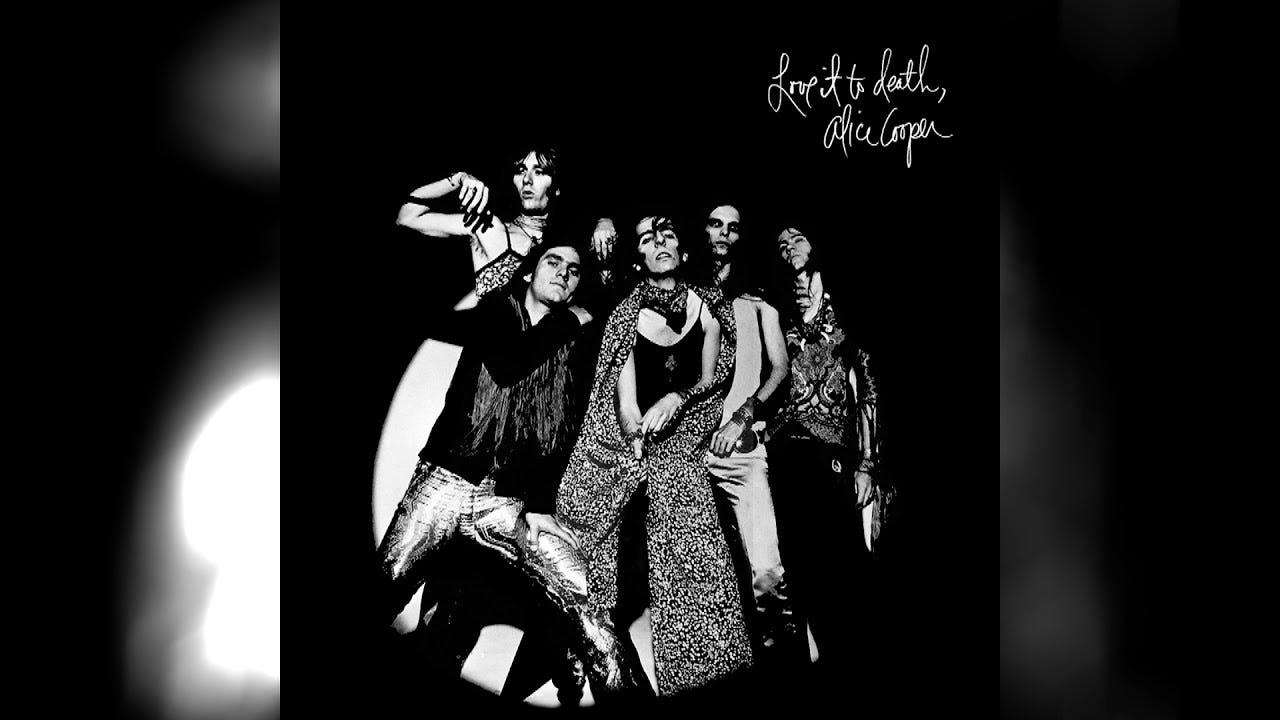
It has become rather obscure, but for a brief moment (4 years) during an extreme period in American culture and counterculture — Alice Cooper (the band and the guy) seized the zeitgeist by the balls and squeezed hard. Things were getting ugly and Alice Cooper ruled.
1970s. Easy Action gave us a hint of the lyrical twists and clever knots but it wasn’t bringing the sound that would make Alice Cooper an effective act of sublime mainstream subversiveness. That started with Love It To Death in 1971 and continued through Billion Dollar Babies and the band tours of 1973, Alice and his gang held a black mirror to Nixonian America and the counterculture alike. And if you were a little too weird and too addicted to pop culture for the crunchy granola crowd, you might have seen yourself in that black mirror and liked what you saw — you saw that you got the joke and comprehended the view.
While I would choose Schools Out (the album) as the peak of their amazing early 70s run, it’s Love It To Death that holds a special place in rock history.
The Long Shadow of Love It To Death
Love It To Death was the hinge point in rock culture. Not The Doors, not Ziggy, not The Ramones, not the Sex Pistols singles. The title Love It To Death set the terms, opened up a space for mocking both counterculture and mainstream and introduced a complexity and twistyiness that everyone has contended with since.
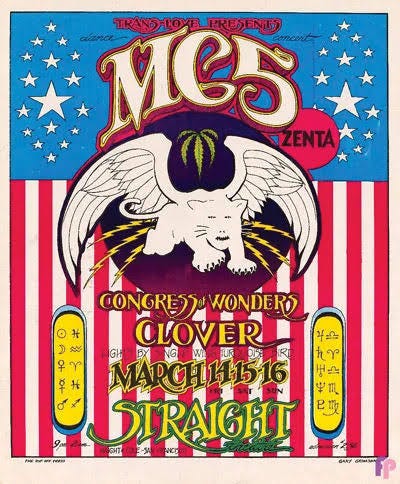
They had landed in Detroit. John Sinclair called for a “total assault on culture.” Love It To Death — even just the title — was basically a riposte. Not necessarily a direct response, but it enacted that assault as a commercial project and self-consciously combined with a ribald excessive embrace that aimed in all directions and complicated the narrative.
I don’t intend to carry on much longer in this entry with my excitable text about what Alice and his gang of drag vampire punks did, what they meant to do and what simply evolved because they were young and had their antennas tuned (Alice was pretty eloquent about it back in 1971).
Anyway, the main thing I’m doing in Part 1of this two part piece is dragging quotes from rock’s intellectuals into the light. The music writers and journalists were fulsome and wordy in their praises. I’ll emphasize this again. I’m doing this because it became relatively obscured.
Eighteen
I was (yes) Eighteen in 1970 editing an underground newspaper as an outlet for my chapter of the Yippies. A local self-serious activists had told us we were “too dada.” We were as much into the absurdity as the anger. Alice Cooper hit the spot.
I was also a voracious reader of the music press. So while the average 18-20 year old was likely to couple thoughts of Alice Cooper with thoughts of Black Sabbath, thinking of it as that dark satanic stuff, rock’s thinkers classed them with writers and musical acts like Jagger/Rolling Stones, Dylan, Lennon. Musically, one critic even named King Crimson. Not quite, but the music was often complicated, the deep cuts were rather operatic and it was all very playful.
 I crossed the ocean
Where no one could see
And I put a time-bomb
In your submarine
Goodbye to old friends
The secret's in hand
With phonied up papers
And counterfeit plans
You never will understand

Halo Of Flies 1972
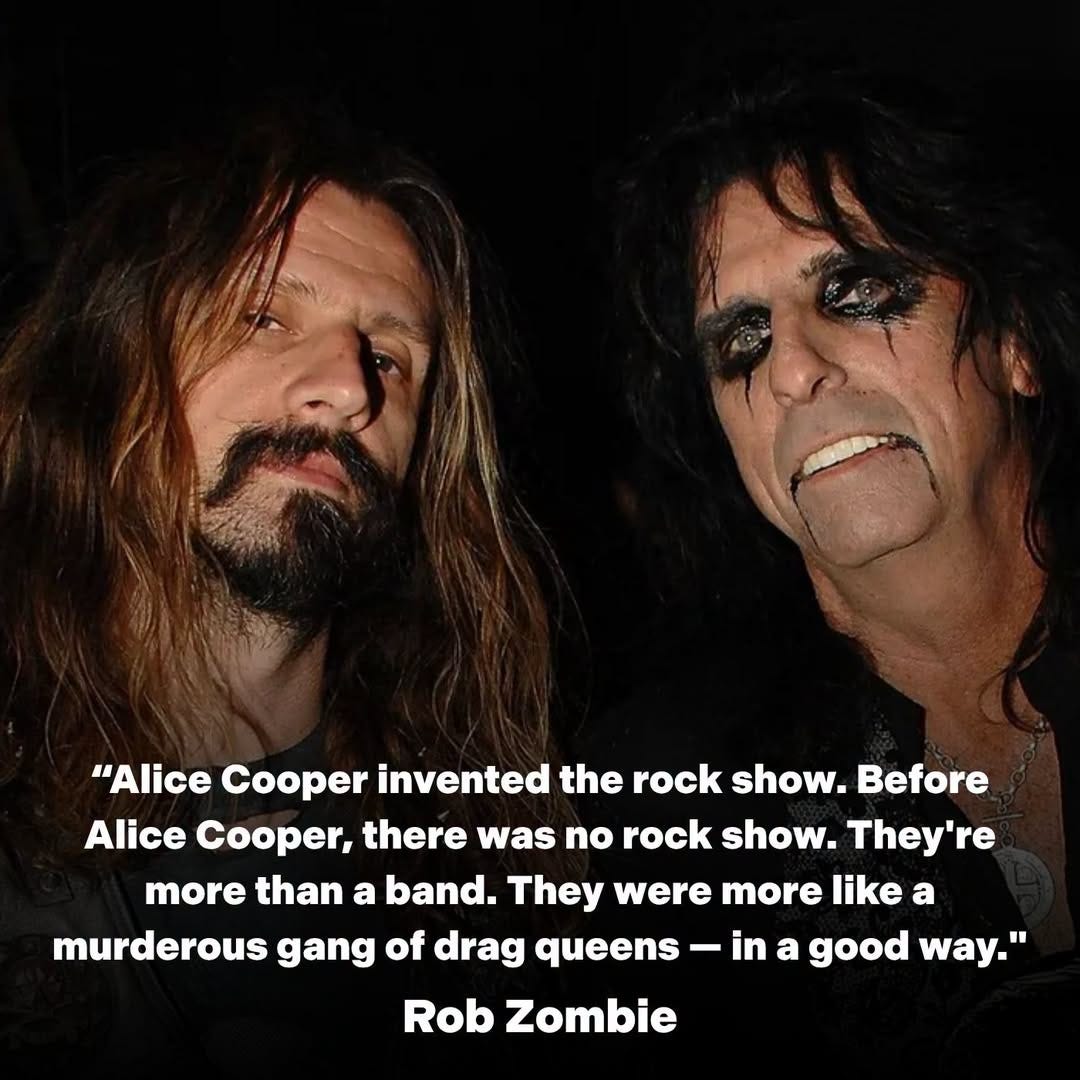
My main intention then is to simply quote generously from several of rock’s leading intellectuals. It was a time when rock music and rock writers seemed important, meaningful, even revolutionary. I remembered from my youth that the writers took Alice Cooper seriously (albeit humorously, as intended).
So I decided to search for proof. I wasn’t sure I would find any. I found the veritable shitload. I found Lester Bangs and John Mendohlson in Rolling Stone; Ed Ochs waxing slightly surreal in Billboard(!?). Robert Christgau writing from his lofty perch at the Village Voice. Even Lenny Kaye. (There’s actually much more)
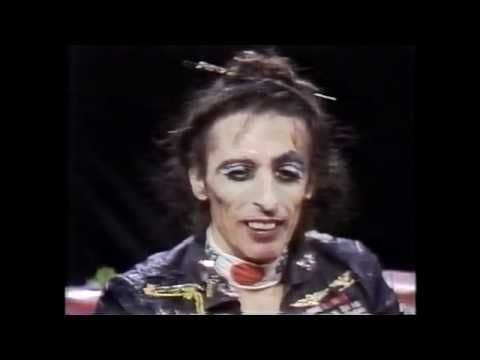
In Part 2, I’ll go a little deeper and take a closer look at the old ghoul as he settles into a normalcy so extreme that it may actually be his most bizarre persona yet, even including the 1981 crackhead appearance on The Tomorrow Show. (No. I don’t intend to harsh on Alice. Everybody loves all the personalities)
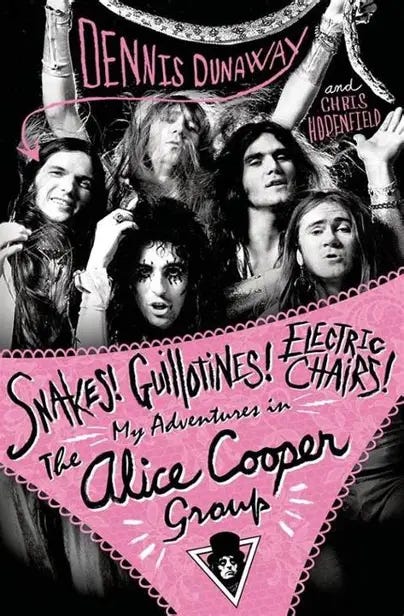
One small asterisk. When people talk about the brilliance of Alice Cooper’s lyrics during this period, they should remember that Alice Cooper was a band. And a substantial amount of the lyrical input came from Dennis Dunaway. Dennis and Vincent (Alice) were high school art department friends. They loved dada and surrealism.
All The Old Quotes
Ed Ochs Billboard 1971
“Alice Cooper added another piece to the brain-squeezing puzzle of their whatfor, but no sooner does the piece fall in than the puzzle seems to explode out anew, bigger, brighter and beyond a shadow of a doubt, and into this year’s butterfly in the ointment of the music business. What is Alice Cooper? And why not? New vocabularies have erupted in explanation, many as a substitute for acceptance, but all that Detroit Alice seems to ask is the brief suspension of your imagination (assuming you’ve got one), to lift a few veils and be entertained.”
Lester Bangs Rolling Stone 1972
“Like all true rock superstars to rise from the Sixties, Alice Cooper is a consummate master of image manipulation... Alice is… a self-invention and technician of forms and poses… [as] Bob Dylan has always been. And if you think that’s a far-out comparison, just listen to Desperado”…
... songs with more weirdities, fetishes, decadence and degeneracy in the form of archetypes derived from TV, pre-Wertham comic books, and the pages of paperback textbooks on deviation authored by spurious PhDs and selling for two or three dollars in liquor stores in every suburb…
…he has brought the Hollywood manipulation of fantasies and attitude to brilliant new levels of cheerful cynicism. Some regard it as contemptuous, nihilistic exploitation and even accuse him of having a vested interest in the status quo and the fucked-up nature of American life because its absurdity turns him on, but I think he’s one of the most upfront stars we’ve ever known…
…Alice is creating absurd and outrageous collages of idiomatic borrowings combined with a distinctly teen-age sense of the morbid….
John Mendelsohn Rolling Stone 1971
“They have a grasp of the absurd that is completely missing from their heavy contemporaries…
… Love It To Death came on the radio in the late afternoon and from the first note it was right: Alice Cooper bringing it all back home again. God it’s beautiful
…[The stage show] “represents at least a modest oasis in the desert of dreary blue-jeaned aloofness served up in concert by most American rock-and-rollers.”
Love it to death… many will, especially those with an ear for nicely-wrought mainstream punk raunch and snidely clever lyrics
Robert Christgau commented about School’s Out (1972)
“The band isn’t just making noise; they are doing a number on us. They’ve discovered West Side Story… and they are using those Broadway jazz structures to mock the very teenage culture they’re selling to.
Charles Shaar Murray NME
“To dismiss Alice Cooper as a mere circus act is to completely miss the point of their tightly-engineered musical genius. Underneath the guillotines and the makeup beats the heart of a phenomenally disciplined rock-and-roll machine, delivering some of the most potent, razor-sharp pop singles of the decade.”
Enough Already!
Yes, I’ve made my point From 1970 - 1973 a new Alice Cooper album or tour evoked the kind of excitement from the intellectuals of rock preserved for ex-Beatles or for Iggy or the Stones or for the man who came next… Mr. Bowie.
Come back for a deeper dive. And yes super-hipsters, I will invoke the less commercial strategies of subversion and compare and contrast the meanings and the lacks.
I came into the life
Looked all around
I saw just what I liked
And took what I found
Nothing came easy
Nothing came free
And nothing came at all until they came after meeee

Killer, 1971
phonied up papers
And counterfeit plans
You never will understand 🧡
An excellent piece of music history.